A printed beach towel carries more than a graphic. It combines a fabric face, edge finish, print process, dimensions, label and packout into one customer-facing product. Buyers who approve the artwork without freezing the rest of that system often discover avoidable differences at the sample stage.
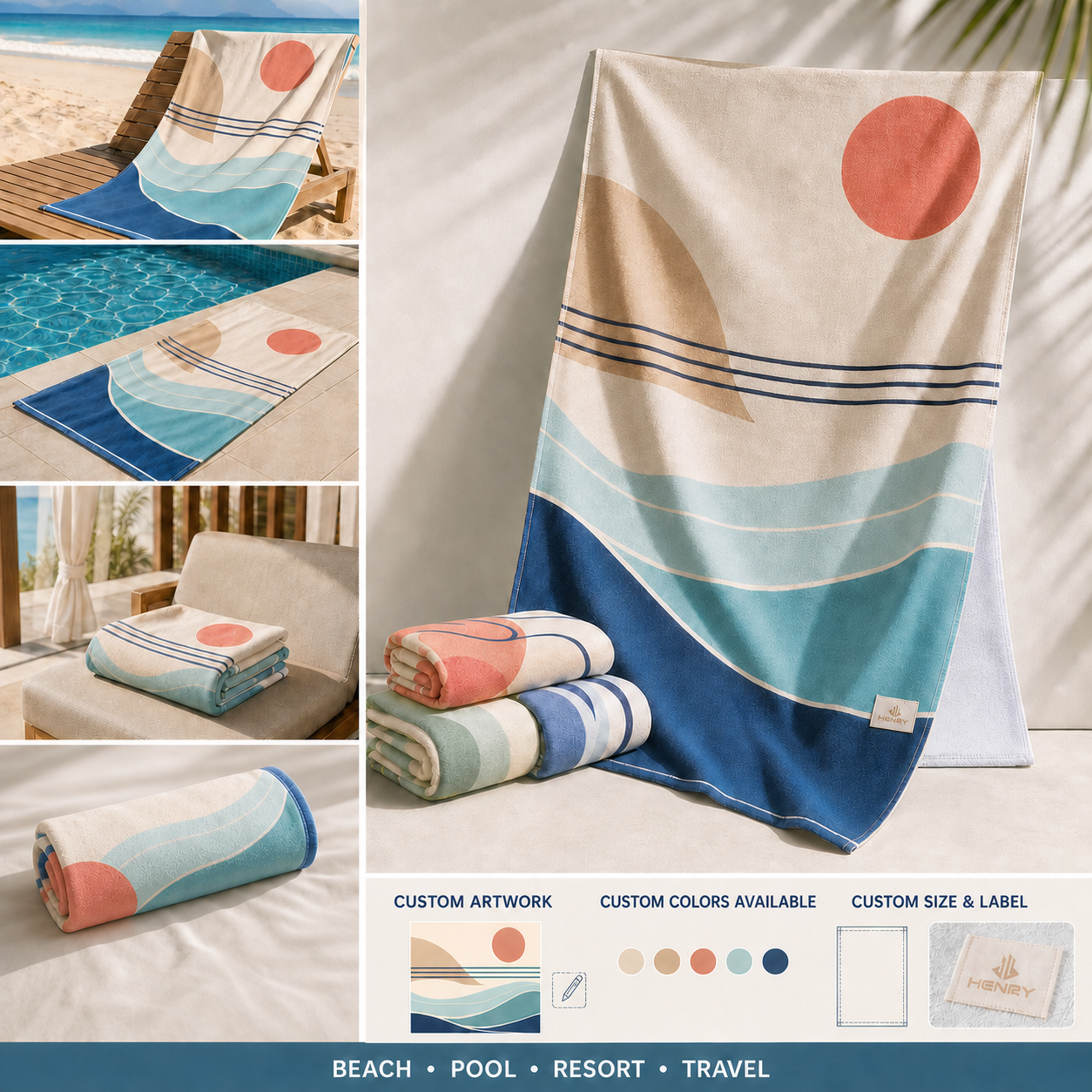
This guide explains how to prepare a quotation-ready brief for a private-label beach towel. It focuses on artwork, size and packaging decisions that can be verified before production. The HENRY custom printed beach towel reference shows a flexible program direction for original graphics, project-specific dimensions and private-label packout.
Begin with the selling format
Define where the towel will be used and how it will be sold. Resort retail, event merchandise, a promotional gift and a coordinated brand collection may use different artwork scale, label placement and packaging.
Record whether the project is one design, a coordinated set or several localized versions. If multiple versions share a base layout, give each one a unique artwork code so files, samples and cartons cannot be confused.
Freeze finished size before artwork scale
Artwork proportions depend on the finished towel dimensions. Specify the finished length and width, orientation and acceptable measurement method. Edge construction can influence the printable area, so the artwork template should show hems or border zones.
Do not enlarge a small preview and assume it will remain sharp. Build the graphic at the final aspect ratio and identify any area that may be cropped or softened by the selected process and fabric surface.
Prepare production artwork, not a screenshot
Supply editable vector files for logos and typography where possible. For photographic or raster artwork, provide the original high-resolution file rather than an image copied from a presentation. Include linked fonts or convert approved text to outlines.
The artwork handoff should contain:
- a unique design code and version date;
- finished size and orientation;
- placement dimensions or full-bleed instructions;
- colour references for critical brand colours;
- a readable mockup showing the intended result;
- notes for borders, hems, labels and any unprinted zones.
The mockup explains intent; the production file controls the approved graphic.
Choose the print direction with the fabric
Print appearance is affected by the towel surface, construction, ink system and finishing. A design with fine text, large flat colour fields or photographic detail may require a different trial than a simple logo repeat.
Ask for a sample using the intended fabric and process. Review colour, detail, hand feel, reverse-side appearance and edge quality together. Avoid universal claims about colour accuracy or performance unless the project has a defined reference and test method.
Approve colour with a physical reference
Screens are useful for communication but are not final colour standards. Identify critical colours, state how they will be referenced and evaluate the physical sample under consistent light.
If the project uses several colourways, list each combination separately. New colours are development requests subject to material and process review, sampling, MOQ and final specification. Approval of one colourway should not automatically approve another.
Treat edge finish as part of the design
Hems, binding, fringes or other edge directions can change the visible proportions of a towel. Define edge colour, stitch colour, corner treatment and the relationship between the artwork and the finished edge.
During sample review, inspect all four sides, measure the finished towel using the agreed method and check whether important artwork sits too close to the edge. Record any adjustment on the controlled artwork file.
Build labels into the layout
Decide whether the towel needs a woven label, printed label, care label, hang loop or retail tag. Specify position, dimensions, fold, text and attachment method. Labels should not cover important artwork or create an uncomfortable placement for the intended use.
Care and fibre information must reflect the final verified product and destination requirements. Legal or regulatory text should be confirmed by the buyer's qualified compliance resource for the target market.
Define packaging as a measurable packout
“Retail packaging” is not a complete specification. Record whether the towel is folded, rolled or presented in a band, bag, box or other approved format. Add pack dimensions, materials, artwork, barcode location and quantity per inner and master carton where applicable.
Ask for one fully packed sample. Check that the artwork remains visible as intended, the product fits without damaging the edge finish and labels or barcodes are readable. Packaging appearance and transport performance should be approved against the final packout, not an empty mockup.
Use a sample approval table
Review the sample against a short controlled table:
| Area | What to verify |
|---|---|
| Identity | Design code, artwork version and colourway |
| Dimensions | Finished size, orientation and edge allowance |
| Placement, detail, colour reference and visible defects | |
| Construction | Fabric direction, hems, corners, labels and stitching |
| Packout | Fold or roll method, packaging artwork and barcode position |
| Records | Approved sample photos, comments and final specification version |
Number every change request and attach a close-up photo. When the revised sample is approved, archive the superseded artwork so it cannot be reused by mistake.
Send a cleaner RFQ
A strong first inquiry includes intended use, finished size, estimated quantity, artwork files, colour references, print direction, edge finish, labels, packaging and required sample checks. Unknown details should be identified as sampling decisions.
HENRY can review the brief, identify missing production inputs and prepare a sample path for a private-label program. Use the custom towel inquiry form and attach the original artwork files.
Frequently asked questions
Should artwork be created before the towel size is fixed?
Create the concept early, but freeze the production artwork after the finished size, orientation and edge allowance are defined.
Is a digital mockup enough for colour approval?
No. A mockup communicates layout. Critical colour should be approved on a physical sample made with the intended fabric and print direction.
What packaging details belong in the RFQ?
State the fold or roll method, packaging format, dimensions, artwork, label and barcode positions, and the required packed-sample checks.
Can one approved sample cover several colourways?
Only if the approval record explicitly includes them. Each colourway should have a unique identity and remain subject to the agreed material, process and sample controls.
Source and product reference
- HENRY GOOD, Custom Printed Beach Towels, verified project-specific artwork, dimensions and private-label packout development direction, accessed August 16, 2026.